
Introduction
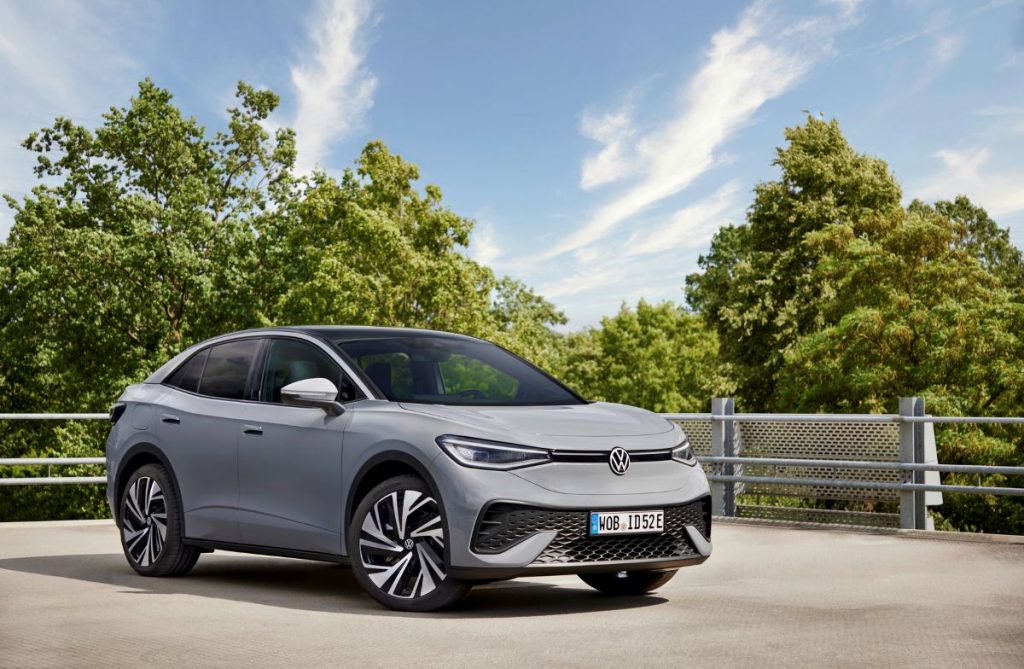
Volkswagen’s ID.5 is actually a coupé take on the familiar ID.4 SUV. It’s packed with plenty of kit, a decent range, and strong safety credentials. However, it’s no sportier than its sibling (bar the more expensive GTX) and arguably asks you to pay more for less space.
Does this competent EV do enough against the best electric SUVs?
Let’s find out…
Quick Overview
Adviser Rating: 4/5
The ID.5 adds coupé-SUV styling to the sensible ID.4 platform, largely retaining its practicality with a big boot and decent rear space. Good real-world range makes it appealing, particularly with recent price cuts improving value. However, the cabin suffers from cheap plastics in places, the driving experience is uninspiring, and fiddly touch controls persist. A stylish, competent EV, perhaps, but not exceptional.
Pros:
- Good practicality (big boot, decent rear space)
- Decent real-world range
- Improved value due to recent price cuts
Cons:
- Cheap-feeling interior plastics in places
- Not exceptional compared to rivals
Trims & Pricing
Volkswagen has, quite honestly, needed to sort the ID.5’s pricing for a while. Now, things look much better. The range (RRP £36,995 to £53,745) finally starts with an appealing figure, thanks to the new ‘Essential Pro’ trim.
This move ducks the ID.5 comfortably under the £40k barrier, making it, perhaps for the first time, feel like decent value. That said, this adjustment was badly needed.
On the whole, the trim structure is still a bit muddled. It’s based on three core setups Pure, Pro, and GTX. But the ‘Pro’ is split into three separate trim levels, whilst the Pure and GTX are stuck with one trim each.
We’d argue the one to have is the new entry Essential Pro (£37k). It gets 19-inch alloys, heated front seats, a heated steering wheel, and a large 12.9-inch screen. Oddly, the Match Pure (£41k) costs more but is based on the smaller-battery Pure setup; we’d give that one a miss.
The popular Match Pro (around £46k) is where the tastiest lease deals start, adding Matrix LED headlights, an electric tailgate, and tinted glass. The top-spec GTX Edition (£54k) throws in all the toys, like 20-inch wheels, sports suspension, a heat pump, and a panoramic sunroof.
Performance & Drive
Adviser Rating: 3.9 / 5
You don’t buy an ID.5 expecting a particularly engaging driving experience. This is, first and foremost, a car designed for covering distances comfortably. The acceleration is very smooth across the board, and its main focus is clearly on achieving good efficiency. In reality, there’s little in the way of real driver involvement to be had from driving it quickly.
Powertrain Options and Performance
The powertrain line-up reflects this. The entry-level 168bhp Pure (0-62mph in 8.9s) feels a bit breathless on the motorway and requires a proper shove of the accelerator for an overtake.
We’d argue the 282bhp Pro is a much healthier 6.7s is the one to have. Even the range-topping, dual-motor GTX feels more brisk (5.4 seconds) than truly sporty, and it still does not have the same urgent punch as key rivals like the twin-motor Kia EV6.
Steering and Handling Dynamics
The overall driving experience is let down by its steering. It’s numb and disconnected, offering very little feedback about what the front tyres are actually doing. Whilst it’s light enough for town, it’s also a bit lazy, meaning you find yourself twirling the wheel more than you’d expect just to navigate a car park. On a twisty road, this translates to a complete lack of fun. There’s plenty of grip, and the firm suspension keeps the car reasonably flat through a corner, but you just guide it rather than drive it. It’s a car that is best driven at a sensible pace.
Suspension & Ride Quality
Speaking of the suspension, it’s definitely on the firm side. It’s stiffly sprung, which helps with that body roll, but it pays a price. It soaks up big potholes well enough, yet it struggles to smooth out broken tarmac, feeling somewhat jittery where rivals like the Kia EV6 feel more composed.
That said, it does feel more composed at speed on the motorway, offering impressive refinement, albeit with a noticeable whistle of wind noise that seems to come directly from the wing mirrors.
Driving Position
The best part of the experience is, perhaps, the driving position. It’s excellent. The raised position gives a good view ahead, and the seats are supportive and easy to find a good driving position in, with adjustable lumbar support as standard. You’ll be glad of that comfort, because visibility elsewhere is compromised. The view out of that small rear window is, quite honestly, dreadful, and, as is typical for these coupe-SUVs, the over-the-shoulder view is just as bad. Even looking forward has its issues; it’s tricky to place the front corners of the car, which, combined with the slow steering, can knock your confidence in tight city streets.
Driver Assistance Systems
Speaking of which, the ID.5 is loaded with plenty of driver aids. The standard adaptive cruise control and lane assist work well. The predictive regeneration feature is also quite effective, monitoring the road and slowing the car if it detects traffic decelerating ahead. However, this all contributes to a bit of a nanny state. The car constantly decides it knows better, for instance, by turning itself off the moment you get off the seat. It’s like driving in a computer game with all the aids on. This feeling is only enhanced by the optional augmented reality head-up display, which, to be fair, is genuinely helpful on a long haul, projecting green lines for you to follow.
Range, Charging & Tax
Adviser Rating: 4.2 / 5
Range is often the headline figure with EVs, and the ID.5 puts in a respectable showing, albeit not best-in-class. Officially, you’re looking at anywhere between 227 miles for the entry 52 kWh ‘Pure’ model, right up to 345 miles for the big-battery 77 kWh ‘Pro’.
The sportier GTX, despite having an even larger 79 kWh battery, sees that dip slightly to 327 miles due to its extra performance hardware.
Now, real-world figures are always a different story. We’ve seen around 300 miles from the 77kWh Pro in mixed driving, which is pretty decent – roughly 80% or so of the claimed figure seems achievable if you’re reasonably gentle.
That’s competitive, though some rivals like the Ford Capri stretch even further on paper. Still, efficiency is strong, hovering around the 3.6-4.0 miles per kWh mark in tests, suggesting VW has nailed the powertrain calibration.
Charging is straightforward. At home on a typical 7 kW wallbox, you’ll need about 12 hours for a full charge from empty on the larger battery. Find a public rapid charger, and the Pro models can take up to 145kW, getting you from 10% to 80% in roughly half an hour. Interestingly, the GTX unlocks even faster 175kW charging, potentially shaving a few minutes off that time.
Financially, the ID.5 makes a strong case, particularly for company car users. Thanks to its zero emissions, it currently sits in the lowest Benefit-in-Kind (BIK) tax band, making it significantly cheaper month-to-month than a petrol or diesel equivalent.
Private buyers are not entirely left out either. You pay a nominal £10 VED for the first year. It rises to £195 thereafter – still less than many combustion-engined cars.
Interior & Tech
Adviser Rating: 3.8 / 5
Cabin Design, Overall Quality, and First Impression
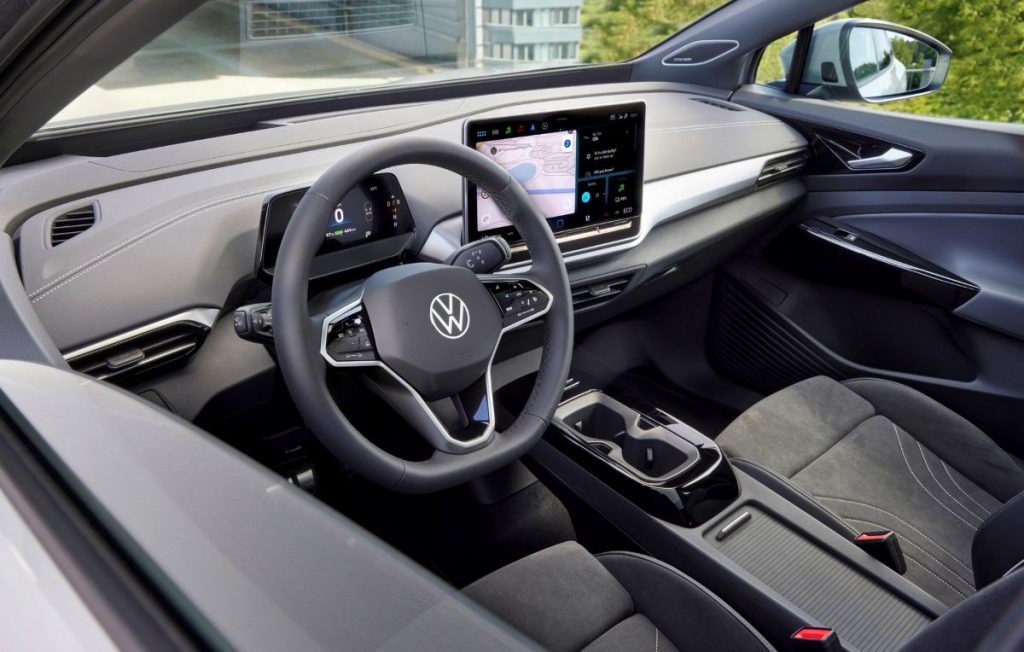
From the inside, the ID.5 greets you with a cabin that mirrors its ID.4 sibling, clean lines, minimalist design, and a distinctly modern feel. It manages to strike a decent balance; techy enough for those keen on the future, yet familiar enough not to intimidate drivers new to electric cars. Ambient lighting and some neat contrast stitching do their best to lift the mood.
However, the overall impression is somewhat let down by the materials. Quite honestly, there are far too many hard, scratchy plastics dotted around, particularly on the dash, doors, and centre console areas you frequently touch or brush against. While acceptable lower down, their presence in prominent spots feels out of place, especially when you consider the ID.5’s pricing and compare it to the plusher cabins found in rivals like the Audi Q4 e-tron or Nissan Ariya. It feels like a corner cut too far, particularly in higher specifications.
Infotainment System and Displays
On the tech front, things are better. The centrepiece is the large 12.9-inch touchscreen, updated with improved software that makes it slicker and easier to navigate than earlier VW attempts. It boasts sharp graphics, quick responses, and comes loaded with features like wireless Apple CarPlay and Android Auto, DAB radio, and navigation with a handy charger search function. Most drivers will likely default to phone mirroring, which works seamlessly. Ahead of the driver sits a simpler, smaller display providing essential speed and range info – clear and uncluttered. An optional augmented reality head-up display is available, projecting navigation prompts and speed directly onto the windscreen, which can be genuinely helpful on the motorway.
Controls and User Interface Issues
Where the tech experience falters is in the controls. Volkswagen’s reliance on touch-sensitive surfaces continues to frustrate. The climate control sliders beneath the main screen are now illuminated (a welcome fix), but remain fiddly to use accurately on the move.
Similarly, the steering wheel employs haptic pads rather than proper buttons, which are too easy to trigger accidentally while turning. And the peculiar setup for the electric windows – just two switches requiring an extra tap to operate the rears – feels like a cost-saving measure that hampers usability. Add in a voice assistant prone to interrupting uninvited, and the control scheme feels less than intuitive.
Driver Assistance and Safety Technology
Driver assistance systems are comprehensive, though. Standard kit includes adaptive cruise control, lane-keeping assist, road sign recognition, and autonomous emergency braking. Parking sensors and a reversing camera are also standard, helping mitigate the poor rear visibility caused by the sloping roofline. For those wanting more, the optional Assistance Package Plus adds semi-autonomous driving capabilities, including automated lane changes and speed adjustments, plus a clever parking memory function.
Be aware, however, that some systems can feel a bit overly keen to intervene, lending a slightly ‘nannying’ feel to the driving experience at times.
Space, Practicality, & Comfort
Adviser Rating: 4 / 5
Despite the focus on style, the ID.5 remains a genuinely spacious and comfortable family SUV inside.
From the front, the driving position is sound, with ample adjustment in the heated seats (including lumbar support) and steering wheel making it easy to get settled for long journeys. Electrically adjustable seats come further up the range or as an option. Comfort is enhanced by individual front armrests – a small but welcome touch.
Storage is generally good too, with large door bins, decent cupholders, and a deep central cubby, although the glove box is disappointingly small. There’s also a dedicated spot for wireless phone charging.
Rear Passenger Accommodation
In the back, the coupé roofline doesn’t rob as much space as you might fear. Two adults will find plenty of legroom and, surprisingly, decent headroom, even if they’re over six feet – though the optional panoramic roof does shave off a few precious millimetres. The completely flat floor is a real bonus, making the middle seat genuinely usable for shorter trips, aided by its own headrest. Three ISOFIX points (two rear outer, one front passenger) and wide-opening doors make fitting child seats relatively painless.
Boot Space and Practicality Features
Practicality is strong, though perhaps not as versatile as some rivals. The rear seats split 60/40 and fold flat, and there’s a useful ski hatch for longer items. It’s a shame the seats don’t slide or recline, however. Boot space is actually a highlight; at 549 litres with the seats up, it’s fractionally larger than the ID.4’s and comfortably bigger than what you’d find in a Q4 Sportback e-tron or Mustang Mach-E. The loading lip is minimal, and an adjustable boot floor comes as standard.
Folding the seats down opens up 1,561 litres, which is generous. However, the sloping tailgate means very tall, boxy items might be a tighter fit than in the ID.4. An electric tailgate is standard on Match trims upwards.
Reliability & Safety
Adviser Rating: 4.2 / 5
When it comes to safety, the ID.5 inspires confidence, largely inheriting the strong performance of its ID.4 sibling. Euro NCAP awarded the platform a full five-star rating back in 2021, with particularly impressive scores for adult (93%) and child (89%) occupant protection. The suite of safety assists also scored well at 85%, suggesting the onboard systems are effective.
As standard, you get a decent roster of active safety kit. Adaptive cruise control and lane-keeping assist are included, alongside autonomous emergency braking that’s clever enough to recognise pedestrians and cyclists, not just other cars. Road sign recognition, parking sensors, and a reversing camera are also thrown in, which is helpful given the compromised rear visibility inherent in the coupé-SUV shape.
Advanced Safety Systems and Optional Features
For those wanting the latest tech, the optional augmented reality head-up display projects key information, including navigation prompts, directly onto the windscreen – it can genuinely reduce the need to glance down. Furthermore, a comprehensive Assistance Package Plus bundles features like semi-autonomous motorway driving (including lane changes), enhanced parking assistance with a memory function for regular spots (like your driveway), and a warning system for cyclists when opening doors.
Reliability and Warranty Coverage
Reliability is perhaps a slightly cloudier picture. Being a relatively new electric platform, long-term data specific to the ID.5 is still emerging. In theory, fewer moving parts compared to a combustion engine car should mean fewer potential issues. The ID.5 also shares many components with other widely used VW Group EVs, which can be reassuring.
Volkswagen provides a standard three-year/60,000-mile warranty on the car itself, which is fairly typical, though you can extend it. Crucially for an EV, the high-voltage battery is covered for a more substantial eight years or 100,000 miles, offering peace of mind about the most expensive component.
Our Verdict
ID.5 is a competent electric family SUV that wraps the sensible ID.4 underpinnings in a sharper suit. It’s spacious enough for most, surprisingly practical boot-wise, offers decent real-world range, and is particularly appealing for company car drivers thanks to low tax rates.
Recent price drops make it a better value, too. However, it’s far from perfect. The interior feels cheaper than the price suggests in places, the driving experience is competent but utterly uninspiring – even the GTX fails to inject real fun – and the reliance on fiddly touch controls remains a niggle.
Ultimately, it’s a solid, stylish choice, albeit one that does not quite stand out dynamically or materially against increasingly tough competition. It is worth considering, perhaps, but may not be compelling.