
Introduction
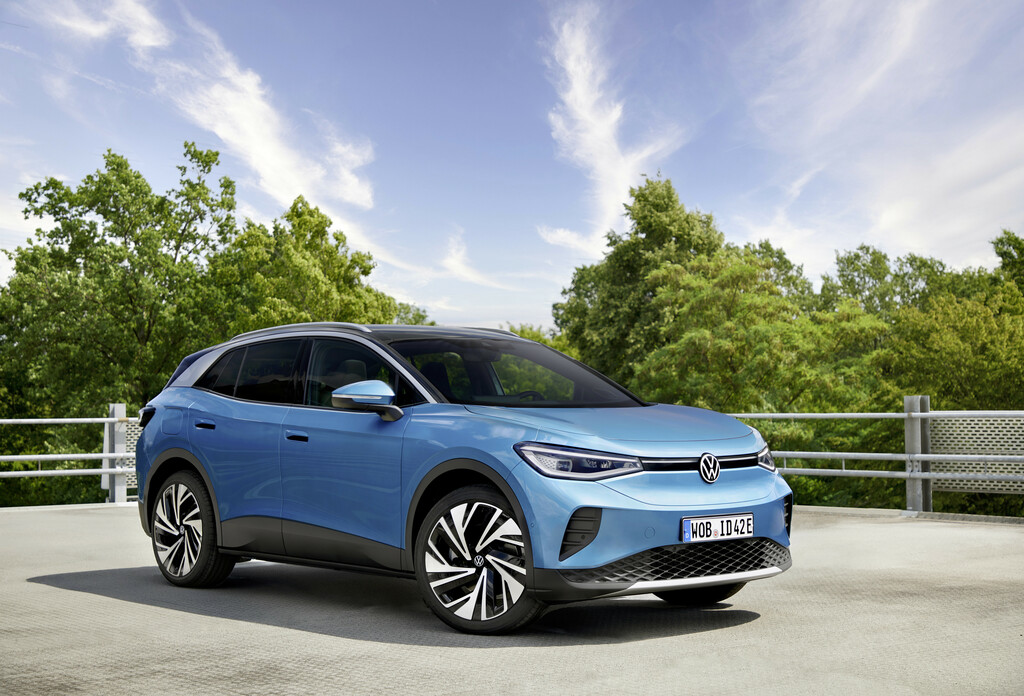
The Volkswagen ID.4 is a practical electric SUV with a roomy interior, solid driving range and an excellent safety score.
The ID.4 competes in one of the most saturated segments of the car market. There are so many strong rivals that it has plenty to prove if it wants to get noticed.
So how well does it really hold up? Let’s find out…
Quick Overview
Adviser rating: 3.8/5
The Volkswagen ID.4 is certainly a practical electric SUV, with a roomy interior, particularly impressive in the back. The boot’s a decent size too. VW seems to have sorted most of the early software gremlins, which is welcome, though the cabin still relies heavily on that central screen and fiddly touch sliders.
Speaking of which, while quality has improved, some plastics do not quite feel up to snuff for the price. Some rivals perhaps do better here.
On the road, it’s composed, steady, and easy to drive, with the Pro models offering a perfectly usable real-world range. It’s not exactly thrilling; think dependable rather than dynamic.
Overall, a solid, sensible family EV, just maybe not the one to set your heart racing.
Pros:
- Spacious cabin, particularly rear seats
- Comfortable drive
- Decent range
Cons:
- Top trims are expensive
- Some software glitches in earlier models
Trims & Pricing
In the United Kingdom, the Volkswagen ID.4 line-up starts at £39,590 for the base trim Match Pure and reaches £52,245 for the high-performance GTX Edition.
There are a few steps between base and top-spec, each with its own take on value and specification.
The Match Pure serves as the basic version with standard equipment that covers everyday needs.
Moving up to the Match Pro at £44,400 adds features such as: heated front seats, keyless entry and an electric tailgate.
If you want an all-wheel drive, you should look to Match Pro 4MOTION which is priced at £46,120.
Next comes the Black Edition Pro, priced from £46,180. It brings black styling details, a panoramic glass roof and massage seats. The Black Edition Pro 4MOTION, at £47,900, has the same upgrades with the addition of all-wheel drive.
At the top of the range, the GTX Edition commands £52,245 and includes:
- 20-inch alloys
- Head-up display
- Power-adjustable seats with a massage function
- Three-zone climate control
- Sportier styling cues
Some trims qualify for the UK government’s £1,500 electric car grant, as long as the final price remains under £42,000 after options and discounts.
Eligible versions include the:
- Pure Essential 52 kWh
- Pure Match 52 kWh
- Pro Essential 77 kWh
The grant does not apply to the Pro 4MOTION or GTX under standard pricing.
Equipment varies slightly by battery type.
The Pure Essential comes with steel wheels, heated front seats, keyless start, dual-zone climate control and a reversing camera.
The Pure Match adds 19-inch alloys and tinted rear windows.
The Pro Match features ambient lighting, matrix headlights and an electric tailgate.
The Pro Black Edition includes black styling details and massaging front seats.
Of all trims, we’d probably choose the Pro Essential. It feels like the most balanced option, delivering strong value without stretching too far into premium pricing territory.
Performance and Drive
Adviser Rating: 3.5 / 5
The Volkswagen ID.4 feels composed and steady on the road. The steering feels light enough for easy manoeuvres in tight spots, helped by a surprisingly compact turning circle.
However, base versions don’t deliver much excitement, and the ride can feel somewhat firm, particularly on larger wheels.
Power and Acceleration
The line-up starts with the 168bhp Pure, which is the slowest in the range, but performs adequately in daily driving.
The Pro model provides, we’d say, the best mix of range and performance. It reaches 0–62mph in 6.7 seconds.
The top-spec GTX raises the power to 295bhp with dual motors and all-wheel drive.
It’s fast, achieving 0–62mph in just 5.4 seconds. However, it does not quite match the speed of a Kia EV6 GT.
How It Feels on the Road
The VW ID.4 manages uneven roads competently, and its suspension absorbs larger bumps better than the Ford Explorer.
The steering responds predictably, with just enough weight to give a sense of control without becoming heavy at low speeds.
Grip through corners holds firm, particularly in the AWD versions and the GTX.
The ID.4 stays composed through corners, with well-contained body movement even when pushed harder.
That being said, there are some downsides as well.
Ride quality, particularly on the 20-inch wheels, is on the firmer side. The GTX includes a sport suspension setup, which helps slightly.
The ID.4 does not deliver the involvement or agility of a BMW iX1 or Ford Explorer, but it finds a decent balance between control and comfort, which most drivers will appreciate.
In everyday use, the ID.4’s electric motor remains virtually silent.
At high speed, wind and tyre noise become noticeable. Competitors like the Skoda Elroq and EV3 are somewhat quieter in that respect.
The accelerator and brake pedals feel progressive and make steady driving easy.
Judging brake pressure at higher speeds can take some getting used to, but in stop-start traffic, the brakes feel natural and consistent.
Driving Position and Visibility
The driver’s seat is supportive and holds its shape well through corners. Lumbar support is included only on the GTX, though the standard seat remains comfortable even on longer journeys.
The steering wheel adjusts in height and reach.
Both front seats come with individual armrests, although they’re narrower than what you get in the EV3 or Ford Explorer.
Visibility from the driver’s seat could be better. The dashboard sits high, making it harder to judge the bonnet’s edge. And the thick front pillars can block your view at junctions.
The rear pillars also restrict over-the-shoulder vision.
On the plus side, standard features such as front and rear parking sensors, a reversing camera, and LED headlights make parking and night driving far less stressful.
Interior & Tech
Adviser Rating: 3.5 / 5
Clean Design and Core Controls
The Volkswagen ID.4 prioritises simplicity inside. The layout is clean, uncluttered, and clearly inspired by the brand’s electric design philosophy.
Rather than a traditional gear lever, there’s a large rotary selector placed behind the steering wheel. It’s similar to what you find in the ID.5 and Skoda Elroq. However, the wheel partly obscures it, so you may have to lean forward to check your selection.
In front of the driver, there’s a compact digital display showing speed, range and charge information. It’s a neat touch.
There are not many physical buttons. Most features are operated through the central screen, which looks sharp and brings a futuristic approach, but isn’t very practical when driving.
The climate controls use touch-sensitive sliders, which now have backlighting, something previous versions lacked.
Infotainment and In-Car Tech
The infotainment screen comes as a 10-inch on lower trims and 12-inch on higher ones such as the GTX.
You can also adjust settings by voice, which we’re not so fond of, as it’s a hit or miss.
The latest infotainment system, however, is more responsive than before.
Sat-nav, Apple CarPlay, Android Auto, and DAB radio come as standard, along with two USB-C ports in the front and two more in the back.
Even so, the setup still trails the slicker systems in cars like the Kia EV3, BMW iX1, or Tesla Model 3. Steering wheel controls also divide opinion. They’re touch-sensitive and can be too easy to activate accidentally, which feels at odds with the car’s otherwise practical nature.
Quality, Materials, and Equipment
Quality has improved compared with the smaller ID.3, with soft-touch materials and glossy trim panels dotted around the cabin.
Yet, to our eyes, some plastics do not feel quite as high-quality as you would expect at this price point. The BMW iX1 and Kia EV3, for instance, use materials that look and feel a notch above.
Nevertheless, the ID.4 offers plenty of standard kit. Every version includes LED headlights, heated front seats, and adaptive cruise control.
Mid-spec models add keyless access and a panoramic roof, while the GTX gains a head-up display and the larger screen.
All in, it’s a well-equipped, tech-heavy cabin that feels solid, albeit not best-in-class.
Space, Practicality & Comfort
Adviser Rating: 4.2 / 5
Space and Storage Up Front
For an electric SUV, the Volkswagen ID.4 is remarkably accommodating. It’s not the largest car in its class, but space in the front is plentiful. There’s sufficient leg and headroom for taller drivers, anyone over six feet should be perfectly comfortable.
Front storage is well thought out, too. With large door bins, a few cubbies in the centre console, and a shallow glove box that’s handy for smaller items.
Rear Seat Accommodation
Rear space is a major plus for the ID.4. There’s plenty of leg and head room for two adults, and even a third passenger would not feel too hard done by. Although, shoulder space becomes tight if everyone’s broad-shouldered.
The flat floor helps with footroom, and the upright seating position gives decent comfort on longer trips.
Small details, like map pockets behind the front seats and cupholders in the centre armrest, add some practicality here and there.
Boot Capacity and Flexibility
The rear seats fold in a 60/40 split, which is less flexible than the 40/20/40 arrangement found in the Tesla Model Y or BMW iX3. Though you do get a ski hatch for sliding longer items through. The seats, however, don’t recline or slide back, which might disappoint anyone who values adjustability, but they’re supportive enough for most situations.
Boot capacity stands at 543 litres, which puts the ID.4 ahead of the BMW iX3 and only a step behind the Volkswagen Tiguan. The wide boot opening makes loading large suitcases easy, and the floor sits low enough to help with heavier bags.
Underneath, there’s a small compartment that fits two charging cables, useful, though not quite as practical as the under-bonnet storage you get in a Hyundai Ioniq 5 or Model Y.
GTX models include a height-adjustable boot floor, which helps level out the space when the rear seats are folded.
The ID.4, overall, strikes a solid balance between space, usability and comfort.
Range, Charging & Tax
Adviser Rating: 4 / 5
The ID.4’s battery options vary by trim level you pick.
The entry-level Pure model is the only one fitted with the smaller 52 kWh battery, which gives an official range of up to 224 miles on the WLTP cycle.
Move up to the Pro models and you get the larger 77kWh battery, officially good for up to 347 miles on a full charge.
The sportier GTX, with its dual-motor setup, carries the same 77kWh pack but sacrifices a bit of efficiency, delivering up to 300 miles officially.
Charging Speeds and Capabilities
As for charging, the figures are competitive, though nothing groundbreaking.
The Pure version supports up to 145kW DC charging, enough to take the battery from 10 to 80 per cent in roughly 25 minutes if you find a suitably powerful public charger.
The Pro can charge at up to 135kW, while the 4MOTION all-wheel-drive models allow up to 175kW.
Each takes around 28 minutes for the same 10–80 per cent top-up under ideal conditions.
Home charging is straightforward too, compatible with both 110- and 240-volt connections.
In day-to-day use, the ID.4’s charging and range figures are more than practical, though rivals such as the Hyundai Ioniq 5 or Kia EV6 can charge relatively faster. Still, Volkswagen’s charging system feels dependable and predictable, which matters just as much.
Running Costs and Tax
On the tax front, things look rather appealing. As with all fully electric cars, the ID.4 attracts a low Benefit-in-Kind (BIK) rate, making it a safe choice for company car drivers.
Running costs in general stay pleasingly low too, provided you charge mostly at home rather than relying on pricier public stations.
Reliability & Safety
Adviser Rating: 3.8 / 5
Standard Safety Kit and Euro NCAP Rating
Volkswagen has equipped the ID.4 with a solid set of safety systems that hold up well against most competitors. Even the entry models come with automatic emergency braking, lane-keeping assistance, driver fatigue monitoring, traffic-sign recognition, and the eCall emergency response function that automatically contacts the authorities in the event of a crash.
It’s a complete package that covers the key areas of driver support without relying too heavily on optional extras.
In crash testing, the ID.4 performed admirably. Euro NCAP awarded it a five-star safety rating, with particularly strong results for child occupant protection.
The adult protection is also excellent, notably surpassing key rivals like the Kia EV3, Ford Explorer, and even the BMW iX1.
Reliability, Software, and Warranty Considerations
In terms of reliability, the ID.4’s track record has been decent so far, although software issues have been reported on earlier builds.
Volkswagen has since rolled out updates to address most of those bugs, and newer models seem better sorted.
The battery warranty covers eight years or 100,000 miles, which is competitive for the class.
The rest of the car gets three years or 60,000 miles of cover. Not bad, though rivals such as Kia stretch to seven years and match the same 100,000-mile limit.
There’s clearly room for improvement for Volkswagen in this area.
Our Verdict
The Volkswagen ID.4 has improved noticeably since launch, with software issues resolved and a smoother, more relaxed driving experience overall.
Meaning that, it’s quiet, practical, and efficient enough to serve as a dependable family EV. But still, it struggles to stand out against strong competitors.
There are better alternatives. Skoda Enyaq is cheaper, has a far more practical cabin and offers more range. This leaves ID4 with no unique selling point, so it lacks a clear class-leading strength.