
Introduction
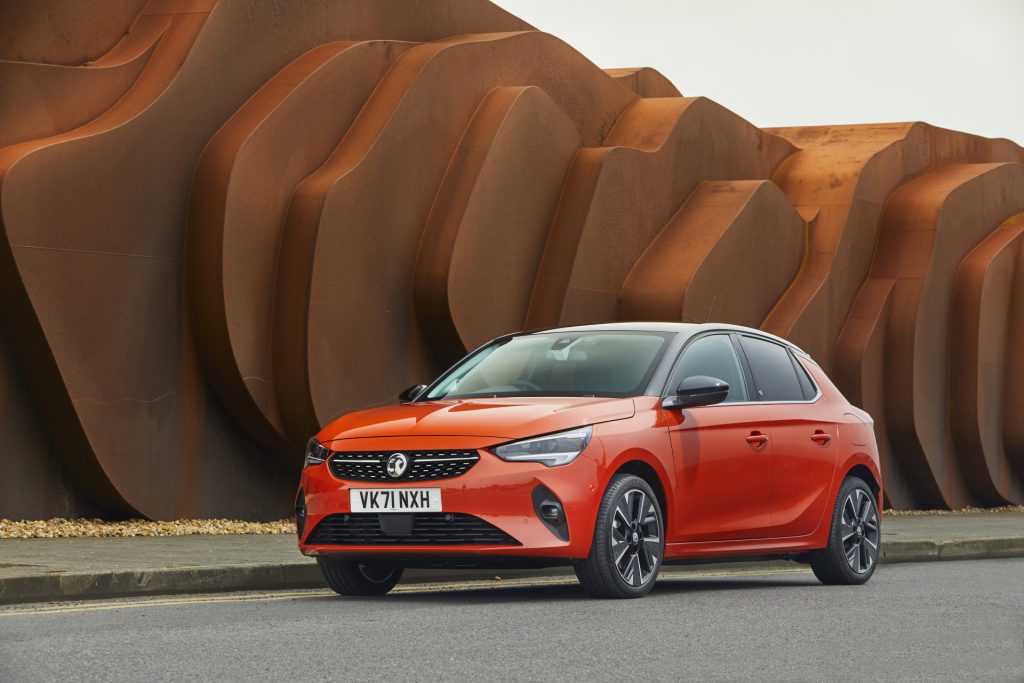
The Vauxhall Corsa is one of the UK’s best-selling small cars, and has been for years. Even if you’ve never owned one, chances are you’ve sat in the passenger seat at some point.
It used to directly compete with the Ford Fiesta, until that model was discontinued. Now, the Corsa sits in a segment with not so many Fiesta-like rivals. It offers strong value in this range. Plus, with sharp looks and plenty of standard kit, it’s easy to see the appeal.
But is it the most practical choice in this class?
Let’s find out…
Overview
Adviser Rating: 3.9/5
The Vauxhall Corsa does most things well enough to stay near the top of the small car charts. It’s smartly styled, well-equipped, and easy to drive. However, while it’s a capable all-rounder, it does not quite lead in any one specific area. For instance, a VW Polo feels roomier, a Fiesta is sharper to drive, and the Peugeot 208 has a more stylish interior.
So where does the Corsa stand? Well, we’d say it holds its own by offering a balanced mix of usability, affordability, and spec. It may not be the best in the segment, but it’s never far off. For daily use, it makes a sensible choice.
If we had to pick one, we’d go for the entry-level petrol.
Pros:
- Decently-equipped, even in entry-level trims
- Broad range of trims and engines
- Cheaper than competitors
- Competitive real-world fuel economy
Cons:
- Lower Euro NCAP score than top competitors
- The touchscreen system could be more intuitive
- Smaller boot space compared to rivals
Trims & Pricing
Vauxhall has kept things simple but flexible. There are four trim levels in total. Each offers a decent spread of engine and equipment. Prices start from £19,410 and stretch to nearly £30,000.
Here’s the quick trim overview:
- Corsa Yes 2025
- Corsa Design
- Corsa GS
- Corsa Ultimate
The base variant Corsa Yes 2025 starts at £19,410. It has only one engine option, you’ll get a 1.2-litre turbo petrol engine with 100PS and a six-speed manual gearbox. This trim is impressively well equipped, considering the price bracket. You get 16-inch alloy wheels, heated front seats, air conditioning, cruise control, and a flat-bottomed leather steering wheel. There’s also a 10-inch touchscreen, rear parking sensors and a full suite of driver assistance features.
Next, there’s Design trim, and oddly, we’d argue it doesn’t add much. It will cost you from around £21,275 and opens up more engine options, including an automatic and a hybrid. But equipment levels stay fairly basic. You don’t get the alloys or heated seats from the Yes trim, and there’s no centre armrest either.
If you want more comfort and convenience, the Corsa GS is a better bet. It starts at £23,655 and adds 17-inch gloss black alloys, a centre armrest with storage, folding mirrors, and a panoramic rearview camera.
Top-spec Corsa Ultimate starts from £26,435. It includes wireless phone charging, keyless entry and start, adaptive cruise control, and electronic climate control. You’ll pay nearly £30,000 for a fully loaded hybrid, so it’s not cheap.
As we see, there’s no shortage of choice. If we had to pick one, the entry-level Yes makes a strong case. For better equipment without a big jump in price, we’d skip Design and go straight to GS.
That said, the Ultimate trim does pack in everything you could want, but it’s not cheap. You’ll need to really value the extras to justify the price.
There are also electric versions available, which we review separately.
Performance & Drive
Adviser Rating: 4/5
Engine Line-Up & Everyday Performance
There are a total of four engine options in the Corsa line-up. However, in our opinion, most drivers will be best served by the entry-level 1.2-litre turbo petrol with 100PS. It’s a flexible, well-balanced choice that works just as well around the city as it does on the motorway. Acceleration is brisk enough, with a 0–62mph time of 9.9 seconds using the manual gearbox, or 10.8 seconds if you go for the automatic.
Hybrid options come in two flavours: 110PS and 145PS. Both pair the same 1.2-litre petrol engine with an electric motor and six-speed dual-clutch automatic gearbox. We’ve tried the 110PS version. It’s smooth and punchy at lower speeds, but it’s only 0.1 seconds quicker to 62mph than the auto petrol. Performance feels similar in the real world conditions.
Ride Quality & Suspension
Ride comfort is a mixed experience. The suspension deals well with sharp jolts like potholes and drain covers. Smaller surface imperfections, though, tend to unsettle it. The problem is more noticeable on trims with 17-inch wheels. The entry-level Yes model, with its smaller 16-inch alloys, actually rides better than pricier versions. Things do calm down at higher speeds, but the ride never quite settles completely.
In corners, the Corsa holds the road confidently and offers decent grip. It’s not as sharp as a Hyundai i20 or Ford Fiesta, with more noticeable body roll. The steering is very light, which helps with parking but makes the car feel vague at higher speeds. GS and Ultimate trims add a Sport mode that increases the steering weight slightly, but it doesn’t add much feedback.
Noise levels could be better. There’s a fair amount of wind and road noise on the motorway. The petrol engines are also more vocal than those in a Polo, although not annoyingly so. Sport mode changes the exhaust note a little, but it feels artificial.
The six-speed manual gearbox has a long but slick action. The clutch, however, has a vague biting point. The eight-speed auto can be jerky when pulling away but settles down once moving. It works more smoothly in the hybrids, though there’s still a slight delay when the engine kicks in. Overall, it’s acceptable, if not exceptional.
Interior & Tech
Adviser Rating: 3.8/5

Now let’s talk about the interior. It won’t turn heads, but it’s solid and inoffensive. Everything feels tightly built, and most materials are of decent quality. That said, the buttons and switches don’t feel particularly plush.
Compared with the Peugeot 208, the Corsa’s cabin feels much more subdued. The 208 offers a more visually striking and premium-feeling interior. That said, the Corsa’s layout is clear and easy to live with, even if it lacks a bit of flair.
Infotainment & Controls
Every Corsa comes with a 10-inch infotainment touchscreen. It includes Bluetooth, DAB radio, USB ports, and smartphone mirroring via Apple CarPlay and Android Auto. That’s useful, as the built-in sat-nav is only available on the Ultimate trim.
The screen itself is crisp and responsive. A volume knob and physical home button make life easier, but the system still feels a bit fiddly.
Controls are generally user-friendly. The air conditioning uses physical knobs and buttons, so you won’t need to fumble with the screen while driving. It’s a more sensible setup than the touchscreen-only system in the Peugeot 208.
Finding a comfortable driving position in the Corsa is straightforward. There’s a decent range of adjustment in both the seat and steering wheel. That said, only the top-spec Ultimate trim offers adjustable lumbar support and a massage function.
Visibility & Parking
Visibility isn’t the Corsa’s strong suit. Thick front and rear pillars limit your view compared with something like a VW Polo. Rear parking sensors are standard, though.
GS adds front sensors and a reversing camera, while Ultimate swaps that for a panoramic version.
In short, it’s not exciting, but it’s practical and well-thought-out for the price point.
Space, Practicality & Comfort
Adviser Rating: 4/5
There’s plenty of room up front in the Corsa, even for taller drivers. Head and legroom are generous by small car standards. The front seats offer a good range of manual adjustment, and in Yes or Ultimate trims, the passenger seat also gets height adjustment. Lumbar support and massage functions, however, are exclusive to the Ultimate trim, and only for the driver.
That being said, the cabin doesn’t feel as airy as a Polo or Ibiza. The thick, angled front pillars and relatively narrow body make it feel more enclosed, similar to what you get in the Peugeot 208.
Storage up front is decent, if not generous. The glovebox and cubby beneath the central armrest are on the small side. More useful is the tray under the dash – ideal for a phone or wallet – and the door bins are reasonably sized.
Rear Space & Access
Rear seat access is not ideal if you’re tall. The door openings are quite narrow. Once inside, though, there’s enough leg and headroom for two adults. It beats the Renault Clio for rear space, but falls short of the Polo and the extremely roomy Honda Jazz. If you plan on carrying adults in the back regularly, the Jazz is worth a closer look.
Rear storage includes small door bins and map pockets behind both front seats.
Boot Space & Flexibility
Boot space is 309 litres, which is about average for this class. It’ll handle a weekly shop without issue. You’ll find slightly more room in a Polo, Clio or Fabia, but the Corsa holds its own. The boot opening is wide and easy to access, though there’s no height-adjustable boot floor. That makes loading heavy items a little trickier compared to rivals with adjustable setups.
The rear seats fold 60/40 as standard, but there’s no extra flexibility. You won’t find clever features like the flip-up seat bases in the Honda Jazz.
For most buyers, the Corsa should be roomy enough, but it’s not the most versatile small car out there.
Fuel Economy & Running Costs
Adviser Rating: 4.1/5
We’ve tested the entry-level 1.2 Turbo Petrol 100PS with a six-speed manual. It returned a real-world figure of around 50mpg. CO2 emissions officially stand at 118g/km, which is competitive for a petrol engine in this class.
The same engine with the 8-speed automatic gearbox is slightly thirstier, with an official figure of 49.6mpg and CO2 emissions of 128g/km. It’s smoother to drive but will cost a bit more in fuel and tax.
If efficiency is your priority, the two hybrid engines are the better bet. The 110PS hybrid claims 62.8mpg and emits just 103g/km of CO2. The more powerful 145PS version returns 60.0mpg and emits 106g/km. In both cases, these figures beat the petrol options by a fair margin.
That being said, the hybrids are much more expensive to buy. For private buyers, it’ll take a long time to recoup the extra cost through fuel savings alone. Where they really make sense is for company car drivers. Thanks to their low CO2 emissions, both hybrids sit in more favourable BIK tax bands.
Electric versions of the Corsa are even cheaper to run day-to-day and carry even lower BIK rates. We cover those separately.
For most drivers, the petrol manual strikes the best balance between performance, running costs and upfront price.
Reliability & Safety
Adviser Rating: 3.8/5
Every Corsa comes with a three-year or 60,000-mile warranty. That’s fairly standard for the class. However, rivals like Hyundai and Kia offer more peace of mind with five- and seven-year warranties, respectively.
Vauxhall equips the Corsa with a solid list of safety features as standard. You get these across all trims:
- Lane-departure warning
- Lane-keeping assist
- Speed-limit recognition
- Driver fatigue alert
- Automatic Emergency Braking (AEB)
That’s good to see, especially at the lower end of the range.
Despite this, the Corsa scored only four out of five stars in Euro NCAP’s crash tests back in 2019. That’s the same score as the Peugeot 208, which shares much of its structure. That said, the 208 performed better for whiplash protection in low-speed crashes.
It’s worth noting that some competitors, including the VW Polo and SEAT Ibiza, achieved full five-star ratings. So while the Corsa covers the basics well, it falls slightly behind the class leaders on outright crash safety.
As for reliability, the current model has not shown any major issues so far, but it’s still relatively early in its lifecycle. The previous generation had a mixed record. That being said, Vauxhall’s UK dealer network is large and should make support straightforward if problems do crop up.
Our Verdict
The Corsa does not lead in any one particular area, but that’s not really the point. It’s a sensible balance of price, performance, and day-to-day usability. You get decent tech, respectable fuel economy, and smart looks, without stretching your budget.
Honestly, it’s not the most exciting to drive or the most spacious inside. Still, it doesn’t fall short in any critical way. As a dependable small car for daily use, it makes a solid case for itself.
Practicality is not its strongest suit, and some rivals do offer more. Even so, the Corsa puts up a decent fight and remains competitive.
If we had to choose, we’d go for the entry-level petrol. It’s the best value in the range.
Still comparing options? Browse more of our reviews at Car Adviser to see how other small cars stack up.