
Introduction
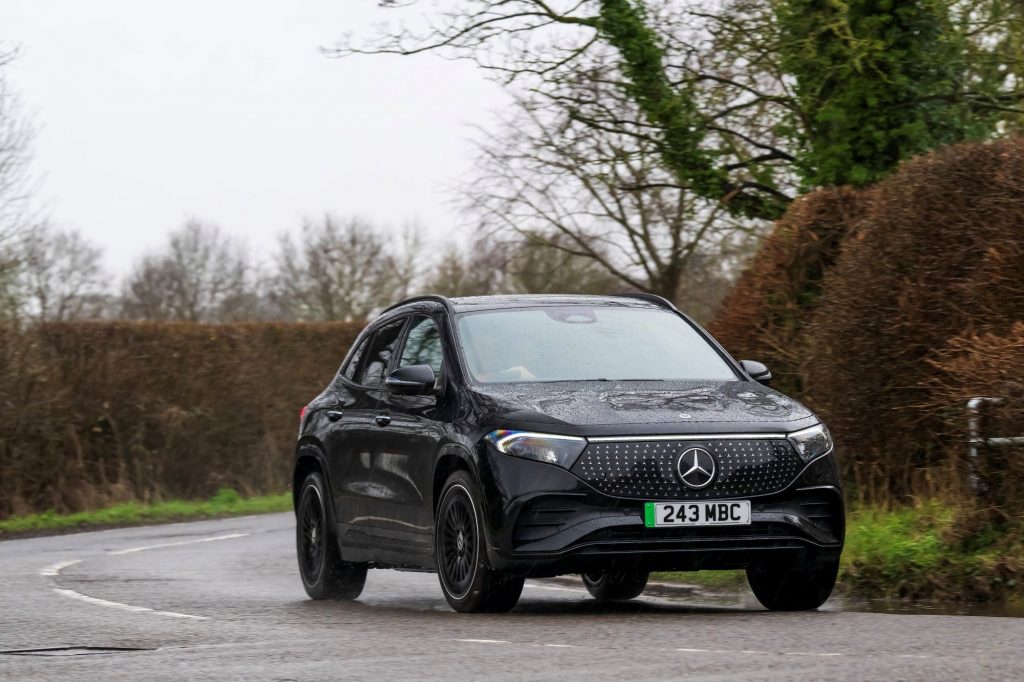
The Mercedes-Benz EQA is an all-electric SUV, and in many ways, it’s the electric version of the petrol or diesel GLA. You can tell they’re related, but the EQA has a cleaner and more futuristic look at the front that sets it apart.
It goes head-to-head with the BMW iX1 and Audi Q4 e-tron. At the same time, it faces plenty of other strong rivals. The Skoda Enyaq, VW ID.4 and Tesla Model Y all sit around the same price point.
So, does the EQA have the depth and character to stand out in this fast-growing segment?
Let’s find out…
Quick Overview
Adviser rating: 3.9 / 5
The Mercedes EQA pitches itself as the electric alternative to the GLA, sharing its platform but wrapping it in a smoother, EV-specific look. It carries that expected Mercedes cabin ambience, classy materials up top, slick dual screens, and a generally refined, quiet feel on the move.
The 250+ version, in particular, boasts a strong official range figure. However, delve a bit deeper, and compromises emerge. Practicality takes a hit, with noticeably less rear legroom and boot space than many rivals, a consequence of adapting a petrol platform. Whilst smooth, the drive lacks excitement, the ride can feel firm on larger wheels, and charging speeds are not exactly cutting edge.
It’s pricey, too, perhaps making rivals feel like a better value overall.
Pros:
- Impressive range
- Premium cabin feel & tech
- Refined & quiet cruising
Cons:
- Compromised Practicality
- Unengaging Driving Experience
- High Price vs Rivals
Trims & Pricing
The EQA range comes in four trims, with prices from £49,750 to £60,510 OTR depending on model and drivetrain.
- Sport Executive – from £49,750
- AMG Line Executive – from £52,010 (250+) / £53,010 (300 4MATIC) / £54,510 (350 4MATIC)
- AMG Line Premium – from £55,010 (250+) / £56,010 (300) / £57,510 (350)
- AMG Line Premium Plus – from £58,010 (250+) / £59,010 (300) / £60,510 (350)
The EQA 250+ uses a 70.5 kWh battery and offers 190 hp through front-wheel drive. Range is quoted at 311 to 346 miles (WLTP), which on the spec sheet looks competitive.
The Sport Executive brings 18-inch AMG alloys, lowered comfort suspension, heated seats, and plenty of kit for an entry model.
The AMG Line Executive sharpens things up with sportier styling, upgraded materials, and optional 4MATIC all-wheel drive. However, range drops to around 260 miles.
The AMG Line Premium is probably the one we’d go for, adding 20-inch wheels, wireless charging, and a stronger sound system, while the Premium Plus goes all out with a panoramic roof, Burmester audio, and head-up display.
It’s quite pricey, and more expensive to buy than the Kia EV6, Smart #1 and Tesla Model Y. You do get plenty of standard kit for your money though. Still, a long-range Skoda Elroq can be had for around £10,000 less and feels just as classy inside. Equally, for not much more than a basic EQA, the Peugeot E-3008 Long Range claims up to 435 miles per charge.
Performance & Drive
Adviser rating: 3.8/5
Smooth, quiet and comfortable for long journeys, but not exactly the sort of car that gets you grinning behind the wheel. That, in short, sums up the EQA.
The 250+ uses a single motor at the front producing 190 bhp, good for 0–62 mph in 8.6 seconds.
It feels calm and unhurried, which rather suits the way this car goes about things.
The 300 and 350 4MATIC versions add a second motor for all-wheel drive, raising output to 228 and 292 bhp.
They’re quicker on the spec-sheet, 7.7 and 6.0 seconds respectively. However, you do lose a bit of range and efficiency in the process.
Despite that, the EQA never really draws you in. It covers ground effortlessly, yes, but there’s little sense of engagement.
We’d say it feels more mature than exciting, which might suit most buyers just fine.
On the road, it’s settled and secure at speed. Around town, the light steering and good visibility make it easy to thread through traffic. However, we found the steering a touch too detached for a car wearing a Mercedes badge.
There’s some body lean in corners, and the firm suspension does not hide sharp bumps, particularly with the 20-inch wheels. The adaptive setup softens things slightly, but it’s not transformative.
Brakes can feel inconsistent, and while the regenerative system allows for near one-pedal driving, it still needs a final touch to stop completely.
On the whole, the EQA feels composed and refined, yet rivals like the BMW iX1 and Skoda Enyaq offer more comfort and a bit more joy from behind the wheel.
Range, Charging & Tax
Adviser rating: 4.5/5
If there’s one area where the EQA impresses, it’s range. The front-wheel-drive 250+ version can manage up to 346 miles on a full charge from its 70.5 kWh battery, one of the best figures in its class. That’s slightly ahead of the Kia EV6, Volvo EX40 and Genesis GV60. It’s also the version we’d recommend if you value efficiency over speed, since the dual-motor 300 and 350 4MATIC models drop to around 266 miles.
Of course, real-world figures will sit lower, but the EQA goes far enough between charges to fit most daily routines without much planning. Charging is less impressive, though. All versions max out at 100 kW on a DC charger, meaning a 10–80% top-up takes roughly 35 minutes. Rivals like the Hyundai Ioniq 5 and Kia EV6 can almost halve that time. An 11 kW on-board charger is standard, giving a full home charge in about seven hours.
Running costs remain low. First-year road tax is just £10, though the car’s price means you’ll pay the £425 luxury supplement from years two to six. Company car users, meanwhile, could pay as little as £25 a month in benefit-in-kind tax — not bad for something wearing a Mercedes badge.
Interior & Tech
Adviser rating: 4 / 5
From inside, the EQA feels very much like a GLA, and that’s largely a compliment. The dash layout looks classy, the materials are mostly good, and the cabin carries that calm, upmarket atmosphere Mercedes buyers expect. It’s quiet, comfortable and well-insulated from the outside world. The driving position feels right, and there’s an instant sense of familiarity that makes it easy to settle in.
The pair of 10-inch displays stretch neatly across the dash, merging driver information and infotainment into one widescreen setup. Graphics are crisp, response times are quick, and the menus feel logical. You can control the system via touch or by using the steering wheel touchpads, but we found those a bit awkward on the move. Mercedes has also removed the old shortcut buttons and central trackpad, leaving you to rely on touch or voice control. In practice, that makes simple tasks more distracting while driving, and the voice system can still struggle to understand basic commands.
Apple CarPlay and Android Auto are standard, and wireless charging comes in on mid-level trims. Higher trims add extras such as gesture control and a fingerprint scanner, though they feel more like novelties than useful tech.
Quality is mostly solid, but not flawless. The top half of the cabin feels premium, yet lower down there are cheaper plastics and slightly flimsy climate buttons that don’t inspire much confidence. It looks the part, but rivals such as the BMW iX1 feel more tightly put together overall.
Space, Practicality & Comfort
Adviser rating: 3.3 / 5
Up front, the EQA feels unmistakably Mercedes. The seats are well-shaped and supportive, and there’s enough space for drivers of most sizes to get comfortable, even with the panoramic roof fitted. The driving position feels spot on, high enough for a clear view of the road, low enough to feel in control. Storage is usefully laid out too, with deep door bins, a decent glovebox and extra space under the centre armrest. It’s the sort of front cabin that makes long journeys effortless.
Move to the back, and things are not quite as generous. The battery pack raises the floor, which means passengers sit with their knees higher than they’d like. After an hour or so, you start to notice the lack of thigh support. Headroom is fine, but legroom is only average, and with three adults across the bench, it feels tight. It’s a shame Mercedes didn’t carry over the GLA’s sliding and reclining seats — they would have made all the difference.
The boot is another compromise. At 340 litres, it trails most rivals and is smaller than the GLA it’s based on. There’s no front compartment either, though at least the rear seats fold flat, and there’s no loading lip to wrestle with.
Comfort levels redeem things somewhat. On the motorway, the EQA is settled and whisper-quiet, with very little wind or road noise. Around town, the suspension feels firmer, and sharp bumps can send a dull thud through the cabin, particularly on 20-inch wheels. The adaptive setup helps, but not by much. All in, the EQA feels calm and composed, just not the most family-friendly electric SUV on sale.
Reliability & Safety
Adviser Rating: 4 / 5
When it comes to safety, the EQA leaves little room for complaint. Every version comes with automatic emergency braking, lane-keep assist, blind-spot monitoring, driver drowsiness detection, and rear cross-traffic alert as standard. There’s also an optional Driving Assistance package that brings adaptive cruise control and a few extra layers of protection, though we’d argue some of that kit should really be standard at this price point.
Euro NCAP awarded the EQA a five-star safety rating back in 2019, matching the closely related GLA. It performed especially well for adult and child occupant protection, scoring 97% and 90% respectively, figures that still hold up today. True, newer rivals like the Genesis GV60 and Kia EV6 earned their five stars under stricter 2022 testing, but the EQA remains a very safe car by any measure.
Mercedes has also built in thoughtful touches, such as a system that warns you if someone’s about to step off the pavement or if you’re opening your door into a cyclist. It’s clever stuff, and it genuinely helps in city driving.
Reliability, meanwhile, is less bulletproof. Mercedes’ recent track record has not been stellar, but there’s reassurance in the fact the EQA borrows proven hardware from the GLA. So far, owners have reported few issues. The standard three-year, unlimited-mile warranty is competitive, while the battery is covered for eight years or 100,000 miles, decent peace of mind, even if rivals like Kia still go further.
Our Verdict
The EQA gets a lot right. It’s quiet, smooth and genuinely relaxing to drive. The cabin feels expensive, the tech is slick, and there’s that feel-good factor you expect from a Mercedes. The badge still carries weight, and the range figures are solid. You also get plenty of equipment as standard, which helps justify the price.
Spend a bit more time with it, and a few flaws start to surface. The ride is firmer than it should be, and there’s not much joy to be found behind the wheel. The battery eats into rear legroom and boot space, so practicality isn’t its strong point.
Rivals such as the Genesis GV60 and Kia EV6 simply do the everyday stuff better. They’re roomier, more enjoyable to drive, and often cheaper too. The EQA feels like a car that’s been adapted to be electric, rather than one designed for it from the start.
Still, if you want a Mercedes and don’t mind the tighter back seats, it’ll serve you well. It’s calm, well-built and easy to live with. Just don’t expect it to surprise you, or make you smile on a twisty road. Otherwise, there are better rivals available.